
Phosphorus in the Charles River
After a year of more consistent sampling for phosphorus at four sites on the mainstem of the Charles – in Waltham, Wellesley, Dover, and Medway–we have preliminary results to share.
BIG PICTURE:
Overall, we found that total phosphorus (TP) levels are tied to water (“flow”) levels more than anything else. At three of the four sites, there was a strong correlation between TP and flow. At the Wellesley site, during times of increased flow, phosphorus concentrations tended to be lower, diluted by the higher water levels. However, at the Dover and Medway sites, TP levels increased at higher flow rates.
Similarly, we found that upstream sites generally had lower phosphorus concentrations than downstream sites. This can be explained by the river’s natural flow carrying phosphorus downstream, but it is more nuanced, as upstream there are more wastewater treatment plants (such as in Milford and Medway).
PHOSPHORUS AND FLOW BY SITE:
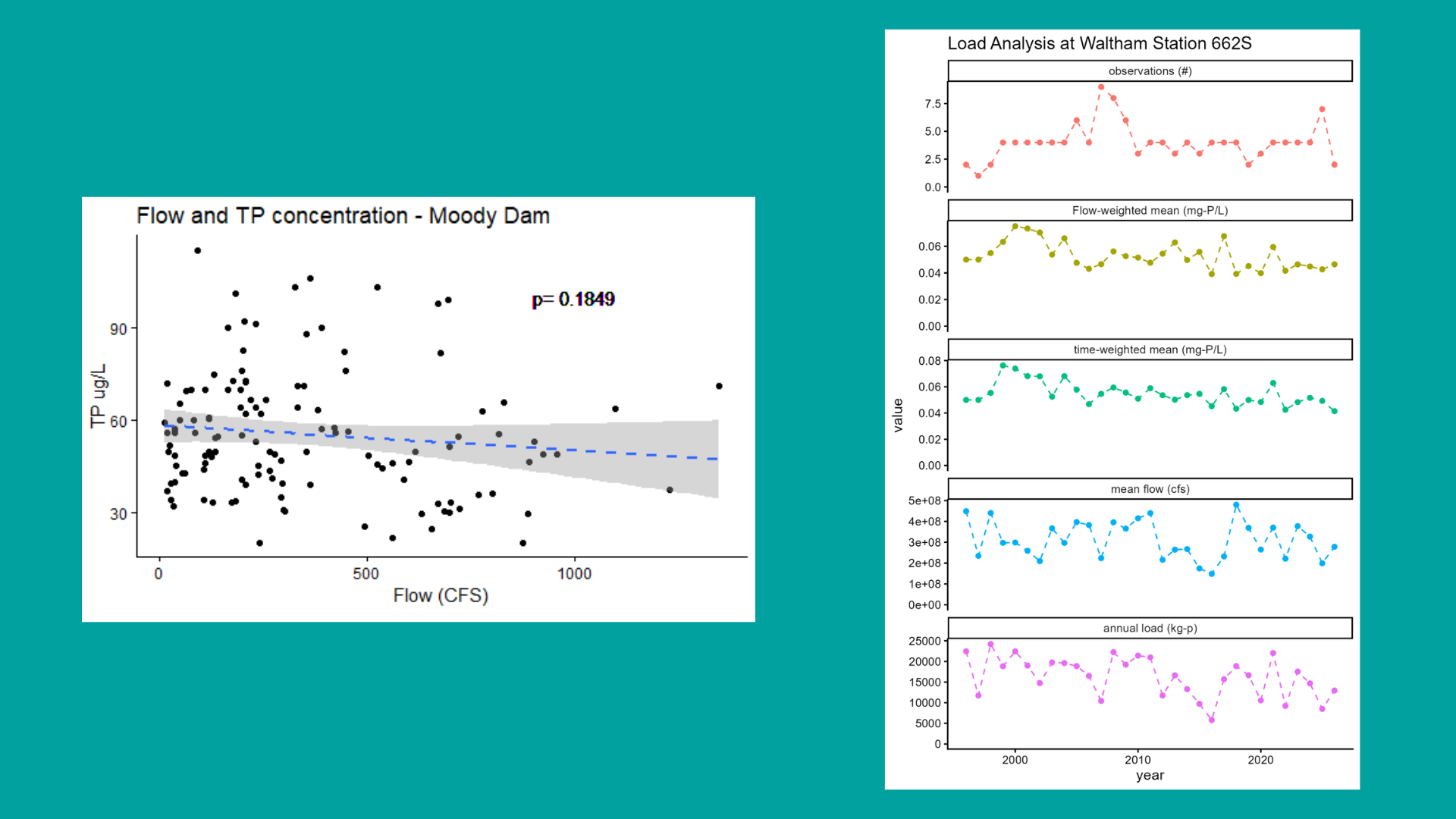
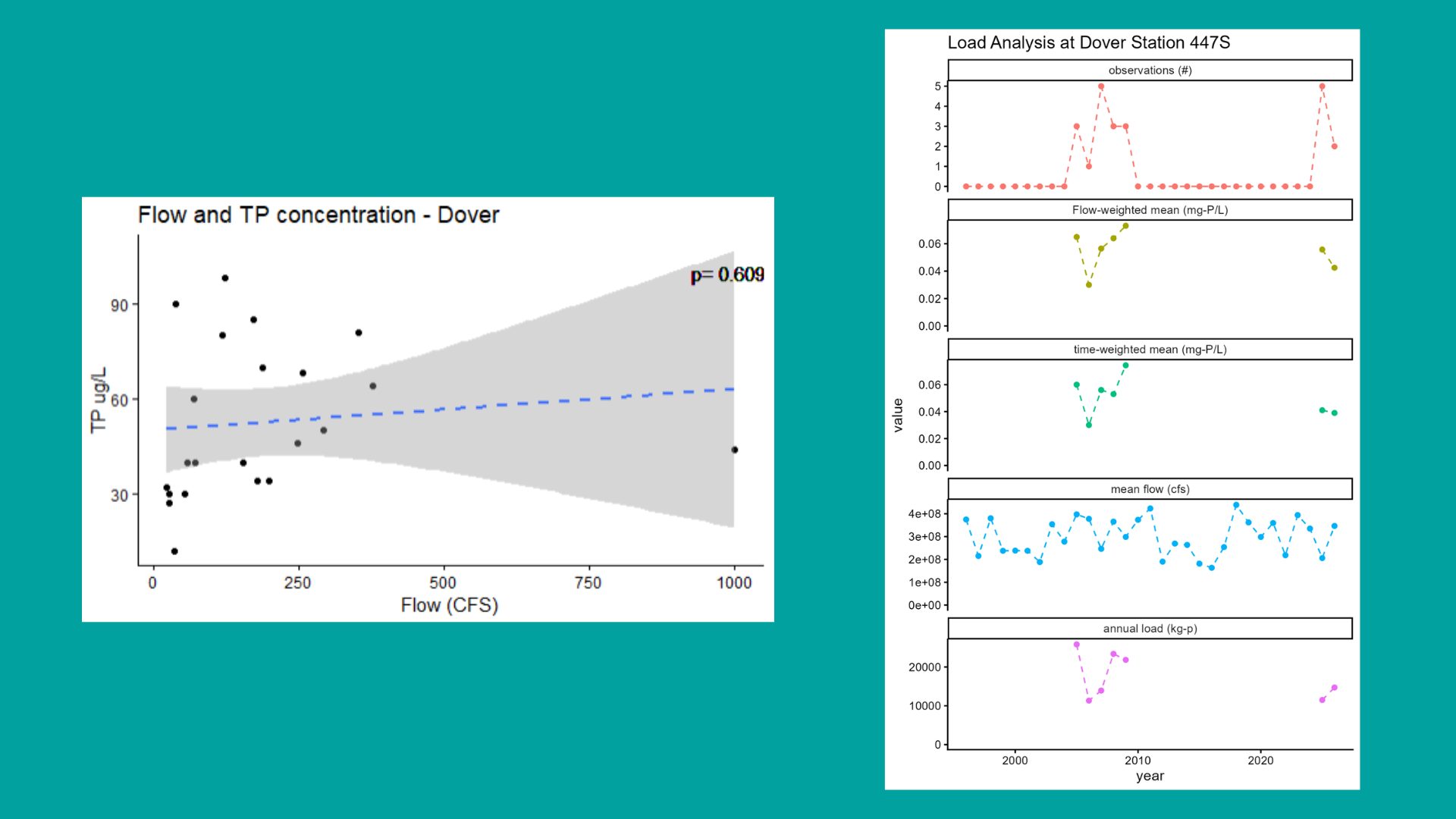
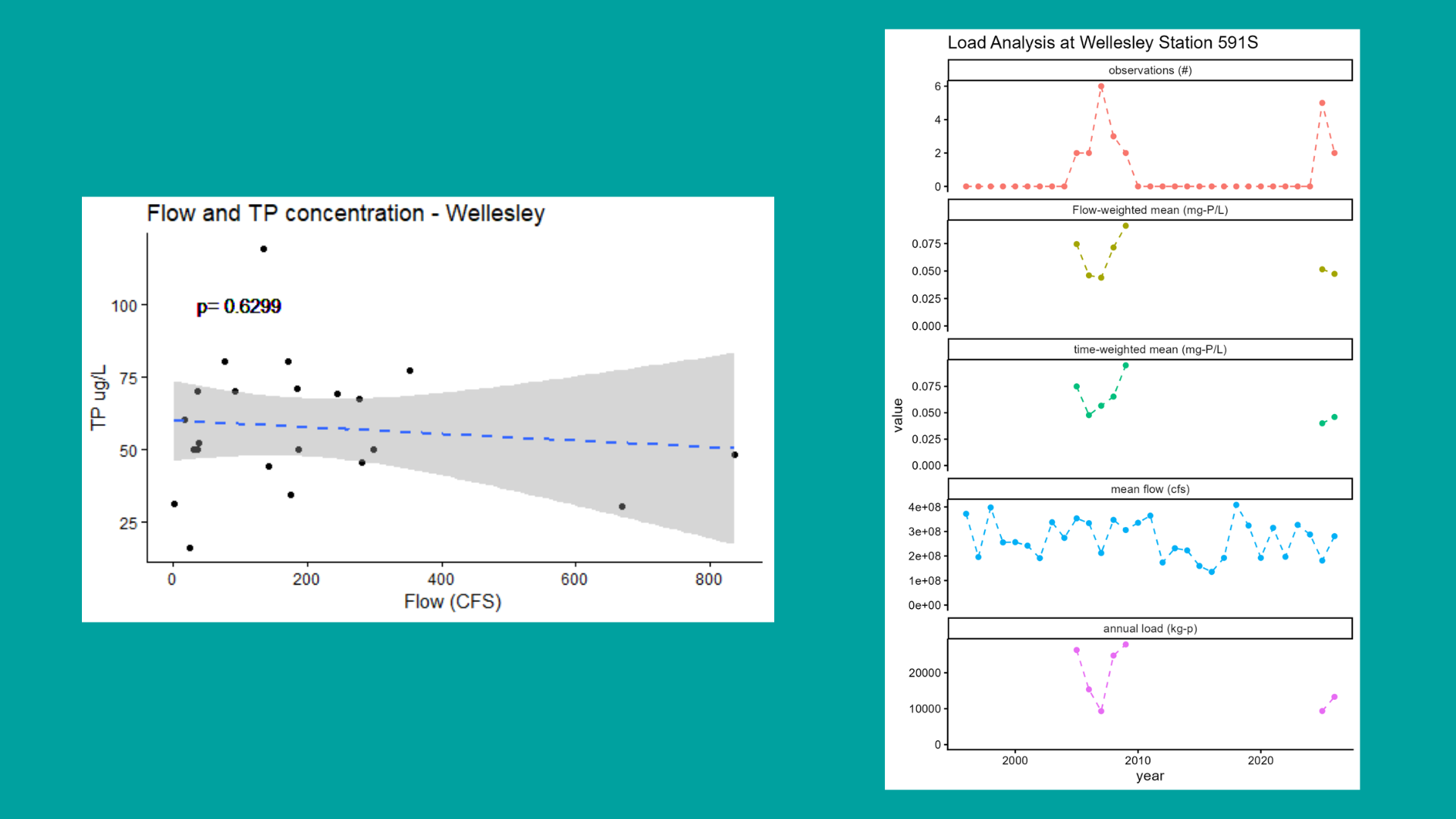
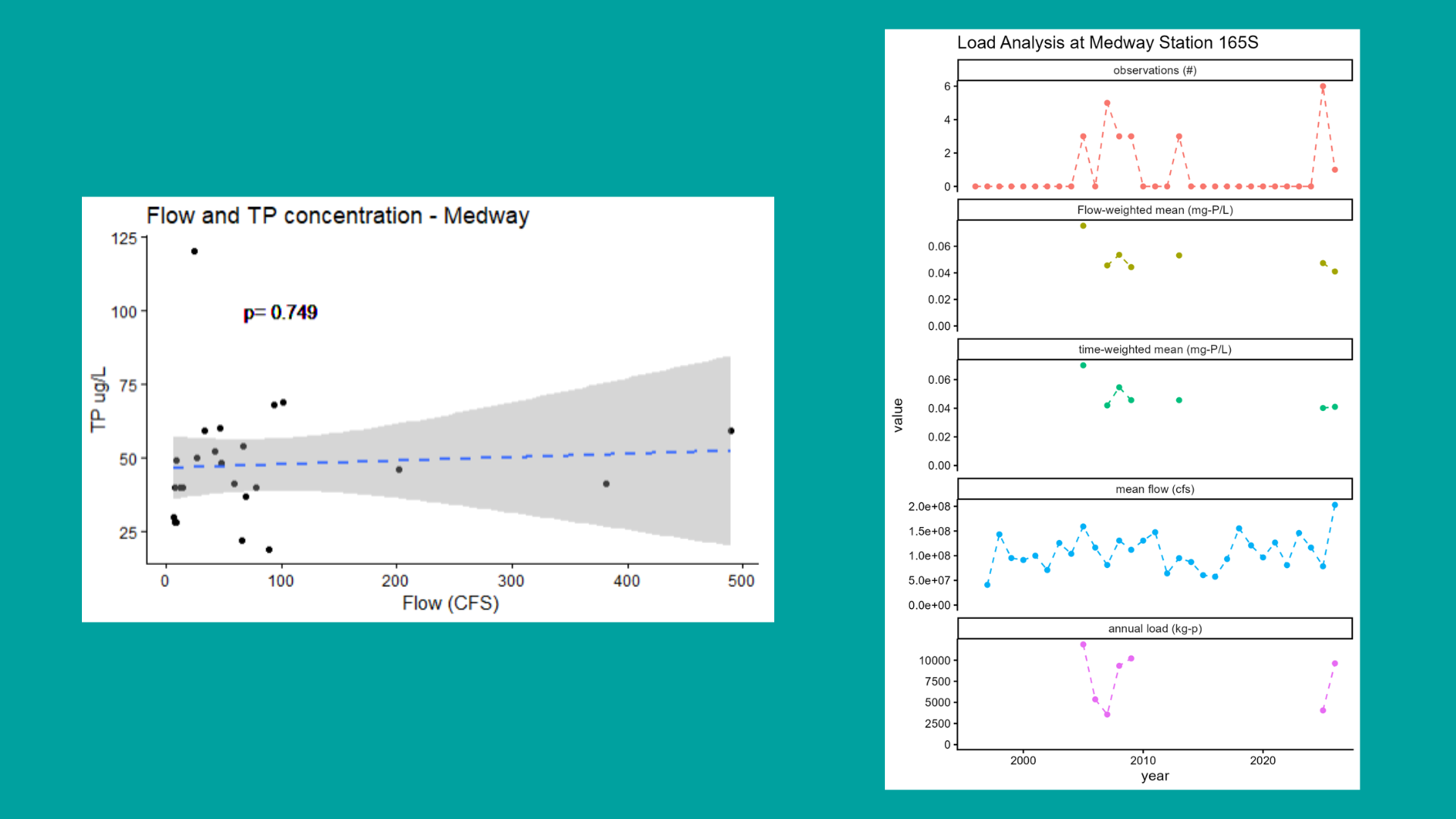
PHOSPHORUS AND THE CHARLES RIVER:
Phosphorus is a naturally occurring nutrient found in fertilizers, leaf litter, and pet waste. Although phosphorus is a vital element for plant life in our ecosystems, an overabundance in a waterway can lead to oxygen depletion, harmful algal blooms, and fish kills. CRWA works with cities and towns to reduce phosphorus discharges into the Charles River to comply with the Massachusetts Municipal Stormwater (MS4) permit.
Find resources, tools, and examples to help local officials advance climate resilience by reducing stormwater pollution on our Climate Resilience 101 Page >>>