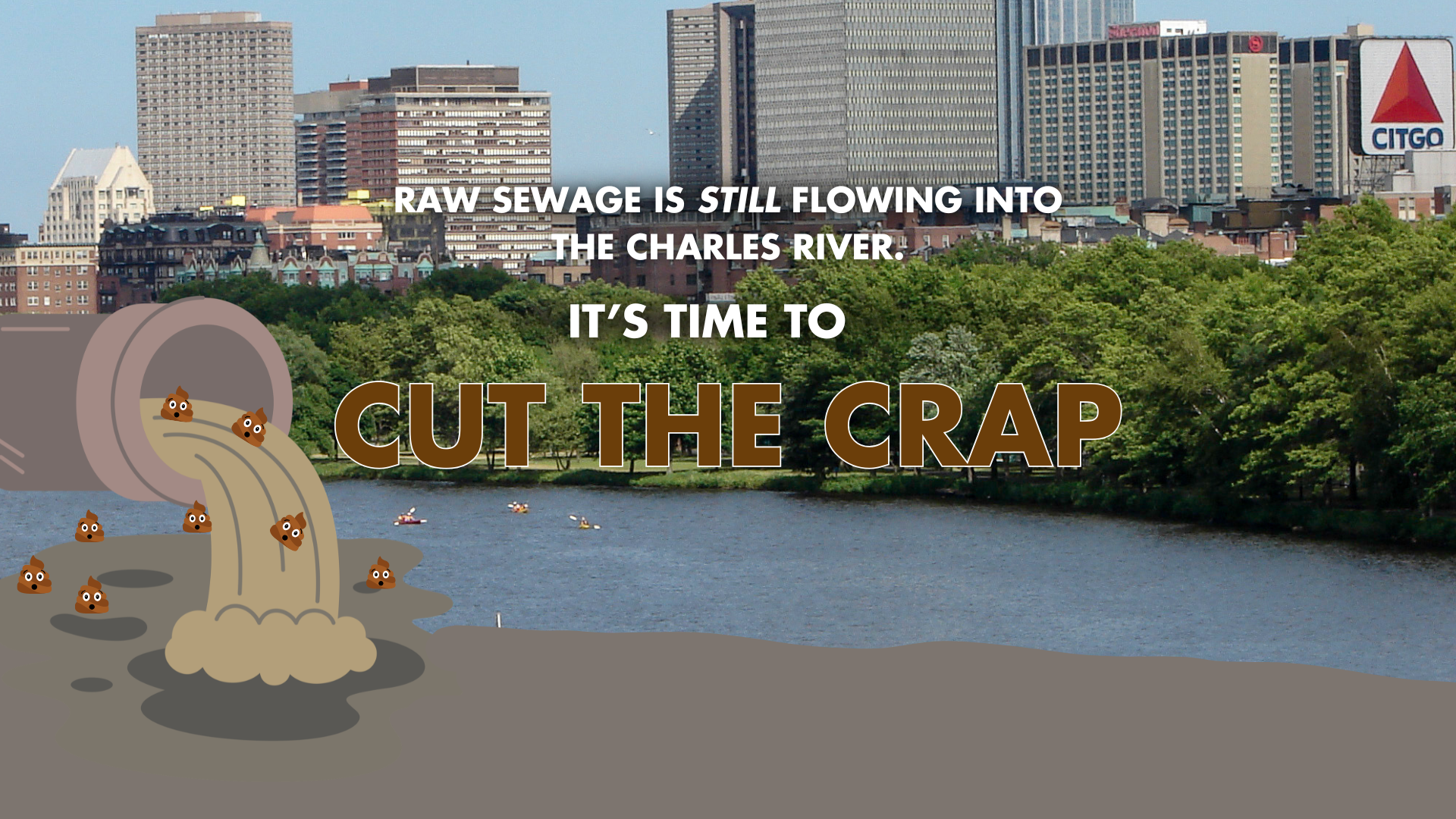
Submit a comment to the Massachusetts Water Resources Authority (MWRA) and the Cities of Cambridge and Somerville before October 30, urging them to eliminate combined sewer overflows!
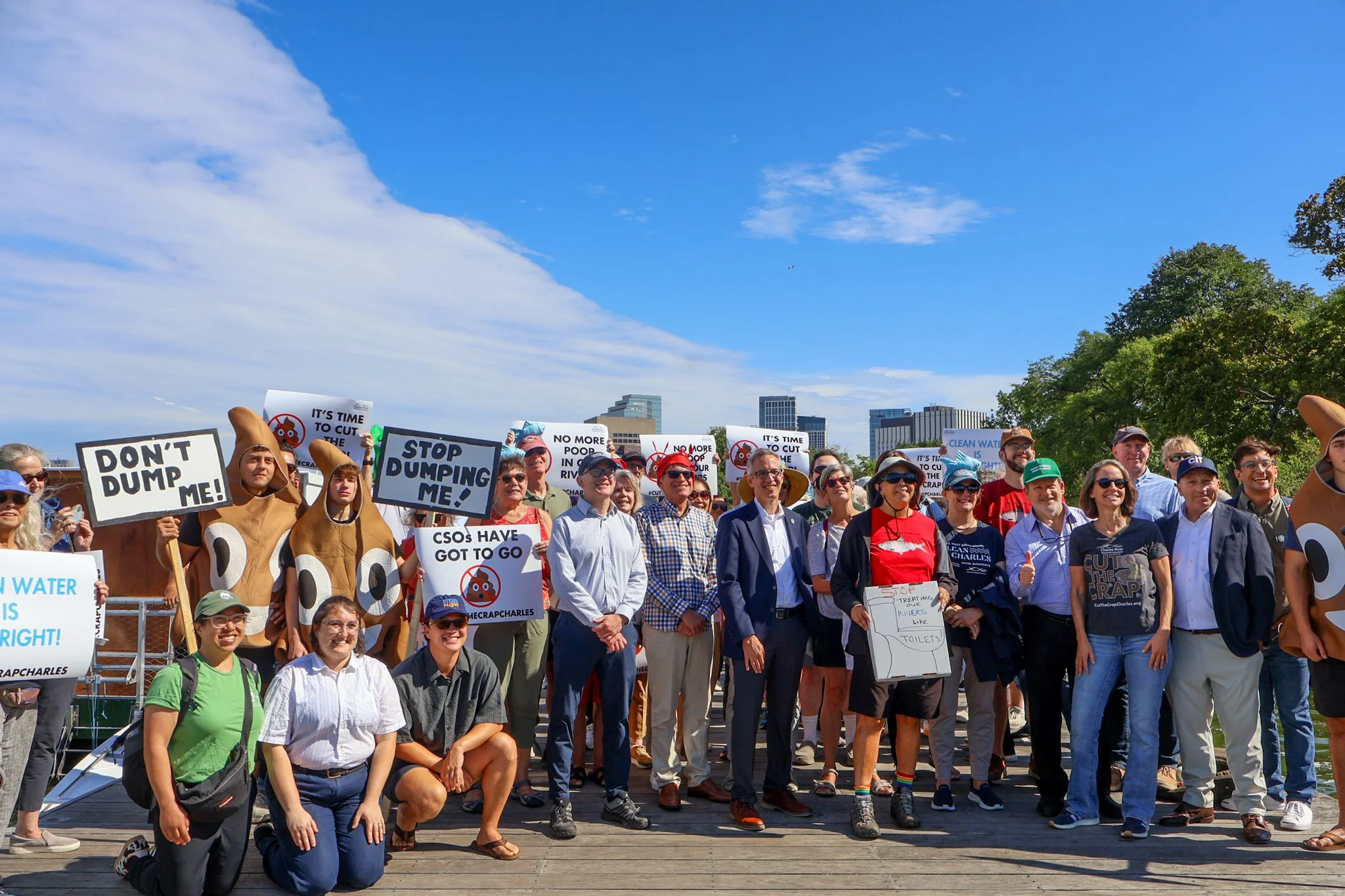
If you believe the Charles River should be truly swimmable, not just cleaner than it used to be, now is the time to speak up. Join us in telling our leaders that it’s time to “cut the crap” going into the Charles River, once and for all.
If you want a swimmable Charles River, then please join us to tell our leaders it’s time to cut the crap going into the Charles River!
Background
After decades of work and billions of dollars spent, the Charles River is much cleaner than it was. Unfortunately, tens of millions of gallons of sewage-laden stormwater are still entering the river every year – and that volume is growing thanks to climate change.
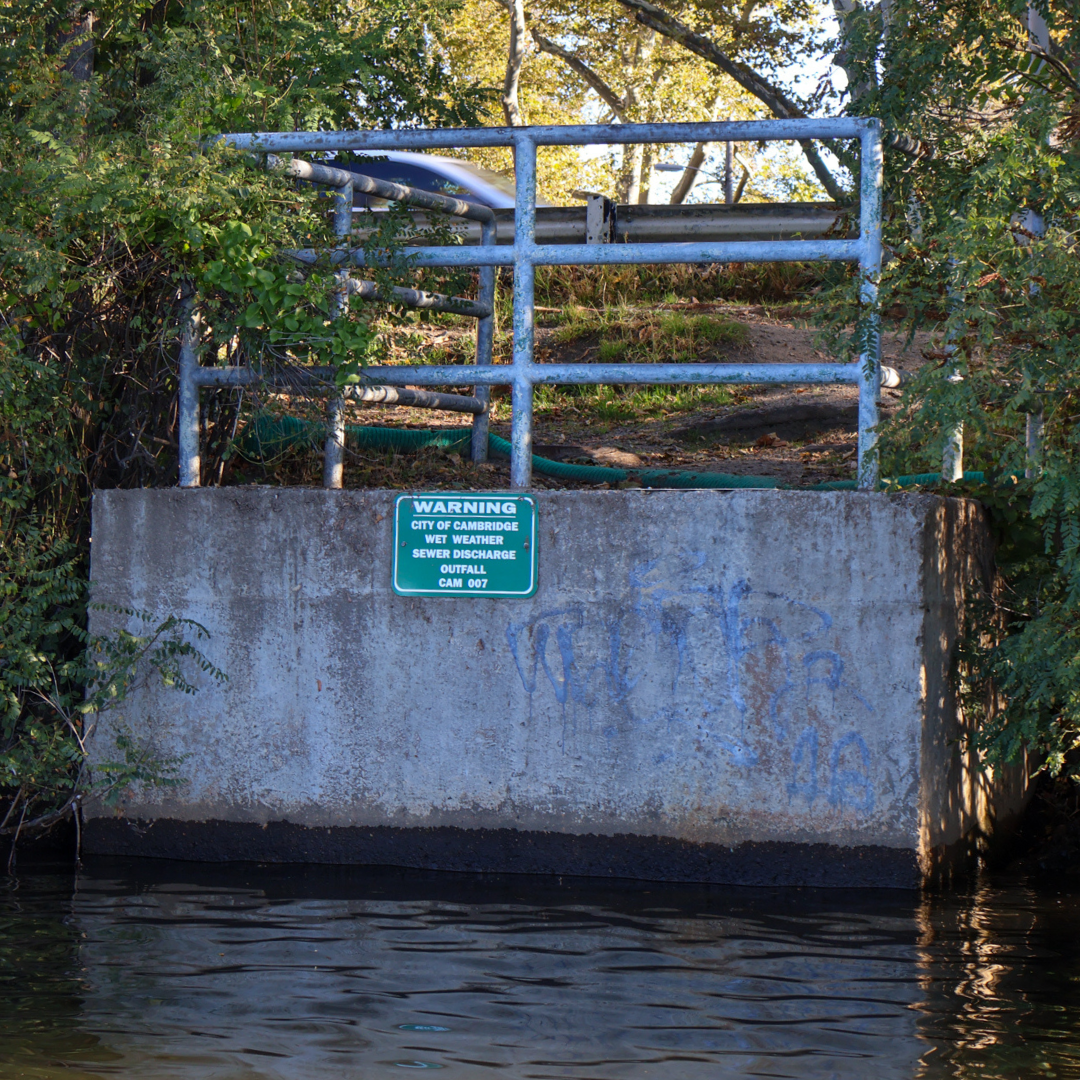
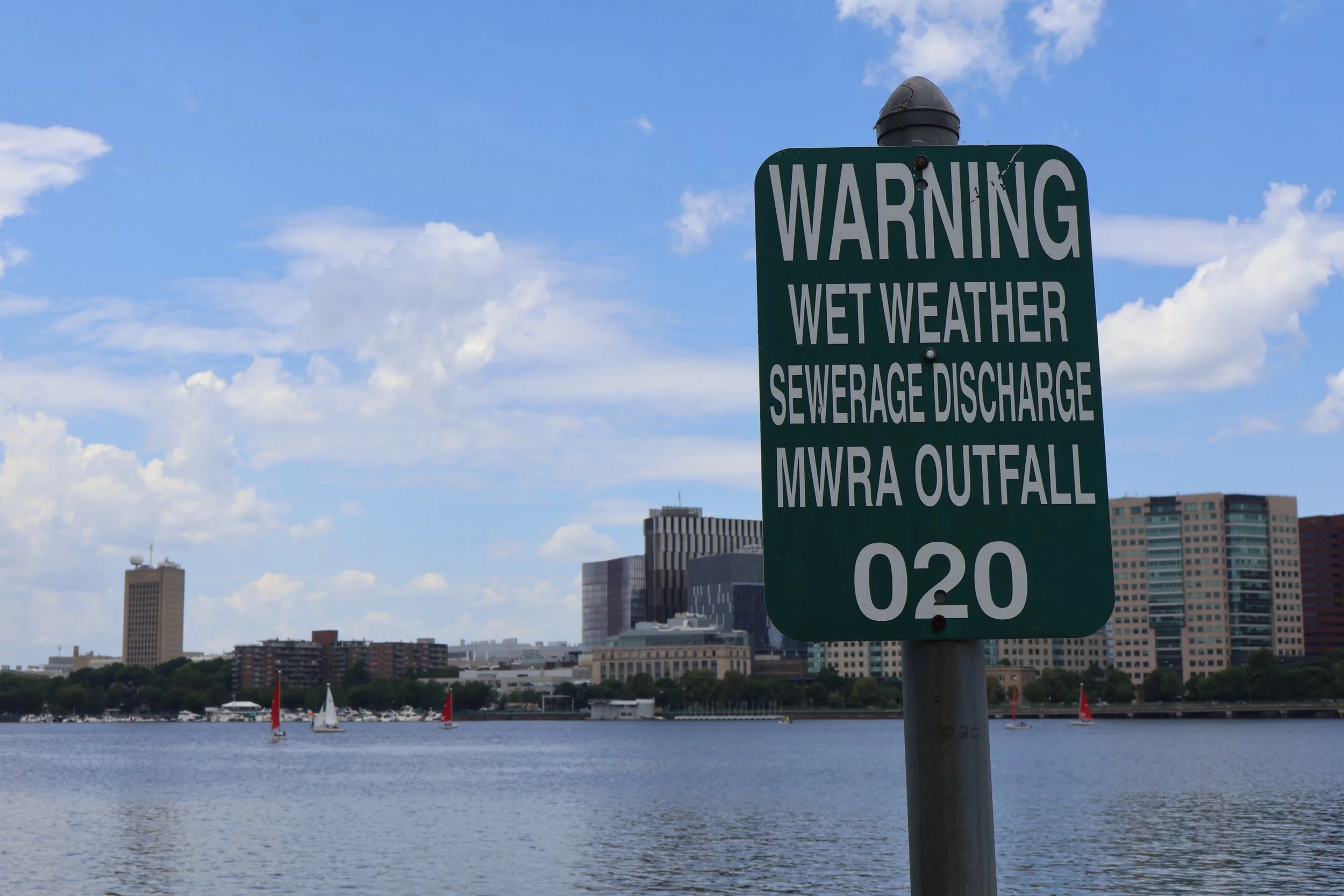
There are still ten Combined Sewer Overflow (CSO) outfalls on the Charles River. In just the past two years, the Charles River received OVER 100 MILLION GALLONS of raw and partially treated combined sewage from 63 unique CSO activations.
After CSOs, the river is considered unsafe for 48 hours. This means that in 2023 and 2024, CSO activations directly restricted recreation on the river for roughly four months.
The Clean Water Act of 1972 called for “fishable, swimmable” rivers by 1983. The Clean Charles Initiative called for “a swimmable Charles” by 2005. It's time to finish the job.
Public Comment Is Open — Your Voice Matters!
On April 30, 2026, the MWRA and the Cities of Somerville and Cambridge submitted a draft plan proposing to dump sewage into the Charles River forever.
This Plan is not final. We need your help to ensure a better outcome for future generations and the health of the Charles. State and federal regulators still need to review the plan and hear from you. Public voices will matter!
Public comment is open until October 30, 2026. Don’t wait! Make your voice heard today by sending a message to our leaders, letting them know we deserve a sewage-free Charles.
Recent News


Frequently Asked Questions
-
Boston is one of the oldest cities in America. In its early days, the management of human waste was quite rudimentary - chamber pots and outhouses. Constructing pipes along the streets to convey wastewater was an advance, and the pipes were designed to carry rain (“stormwater”) as well, because the stormwater would help push the waste along to its eventual destination in the Charles River or Boston Harbor. By the 1880s work was underway on modern sewer infrastructure using flushing toilets instead of rainwater to convey the waste. For many decades, the way the city managed wastewater remained the same: sewage was discharged directly into the Charles River or the Boston Harbor. As the population grew, more and more human waste went into the river and harbor, resulting in an increasingly smelly and unhygienic city. By 1950, all seven Charles River beaches were permanently closed because the water was so unhealthy.
-
In January 2021, the Governor signed An Act Promoting Awareness of Sewage in Public Waters into law. This requires combined sewer system operators to notify the public when combined sewer overflows occur. You can sign up to receive these notifications in real time by clicking on these links, make sure to sign up for all of them (unfortunately the law did not require the operators to coordinate by water body)! Cambridge, Boston, and MWRA.
This act also created a “CSO Data Portal” where residents can access a record of discharge events since 2023.
-
Increased cases of gastrointestinal illness are associated with combined sewer overflow events. Researchers observed a higher risk of illness in the 4 days following extreme CSO events compared with days with no CSO events in Massachusetts waterways like the Charles that are not supplying drinking water. This means contamination is only occurring through the environment.
-
There are many options to reduce and eliminate CSOs. We can separate the combined pipes, using existing pipes for sewage and adding new pipes to carry stormwater. We can build large underground storage tunnels to hold stormwater or combined sewage during storms and release it slowly over time to prevent it from overwhelming the combined system. We can invest in “green stormwater infrastructure” such as rain gardens, permeable pavers, and blue roofs to capture stormwater and keep it out of the combined system temporarily or permanently. But none of these will happen to the extent needed for a healthy Charles unless decision makers hear that the public supports the necessary investments to do so.
-
Boston is not the only city in the state or country dealing with the aftermath of combined sewer systems constructed centuries ago. Many cities are facing the same challenge and some are rising to the occasion, addressing combined sewer overflows, flooding, and lack of greenspace, while simultaneously building climate resilience. Hear what we can learn from Milwaukee Metropolitan Sewerage District’s management of their CSOs about possible strategies and solutions to address this issue.
-
CSOs affect everyone who recreates on or near the river, lives near the river, or cares about it being healthy. In particular, sewage discharges disproportionately affect residents in Environmental Justice communities. Dr. Nathan Sanders, a data scientist and Climate Justice Design Fellow at Harvard University has found that in Massachusetts, watersheds with socially vulnerable populations are disproportionately affected by the occurrence of CSOs. Across 31 Massachusetts watersheds, CSO volumes are greatest in watersheds with the highest proportion of non-white, linguistically isolated, or low-income households. When comparing any two watersheds, on average, a watershed with double the percentage of non-white residents will receive three times the CSO volume.
-
The Charles River Dam was constructed to manage the impacts of combined sewers. In the 1870s, waste from the combined sewer system accumulated on tidal flats and created what the Boston Board of Health described as
“an atmosphere of stench so strong as to arouse the sleeping, terrify the weak, and nauseate and exasperate nearly everybody..”
In order to address this sanitation crisis, city leaders considered sewer separation but instead chose an alternative: construction of the Charles River Dam which permanently restricted tidal fluctuation, eliminating the noxious odors associated with low-tides and establishing the lower Charles River basin that we know today.
Do you have additional questions? Submit them here:
Thank you to the other groups that have urged the MWRA to Cut the Crap: