Green Projects Community Design Workshop
With so many exciting projects going on in Milford, it can be overwhelming for anyone to keep track of and stay engaged with developments in town. Conversations around improvements to many cultural centers and outdoor areas in Milford sometimes unintentionally lose their impact among all the noise! Still, it’s important to stay tuned in, especially at such a crucial juncture in Milford’s emerging leadership in sustainability within the watershed. These projects wouldn’t be possible without enthusiasm from residents eager to see change in their neighborhoods.
For that reason, CRWA, in partnership with ClimateThrive and GZA GeoEnvironmental, hosted a focused resident workshop aimed at familiarizing attendees with environmental- and greenspace-centered design projects in Milford, all while directly influencing the course of these projects. Funded by awards, including the Municipal Vulnerability Preparedness and Coastal Zone Management programs, this work is fueled by consistent information exchange between the project partners and Milford residents. As a matter of fact, priority sites and even the grant funds themselves were informed by community concerns shared as a part of past projects in town. Needless to say, community input is an essential component of the project design process, ensuring the project aligns with local priorities.
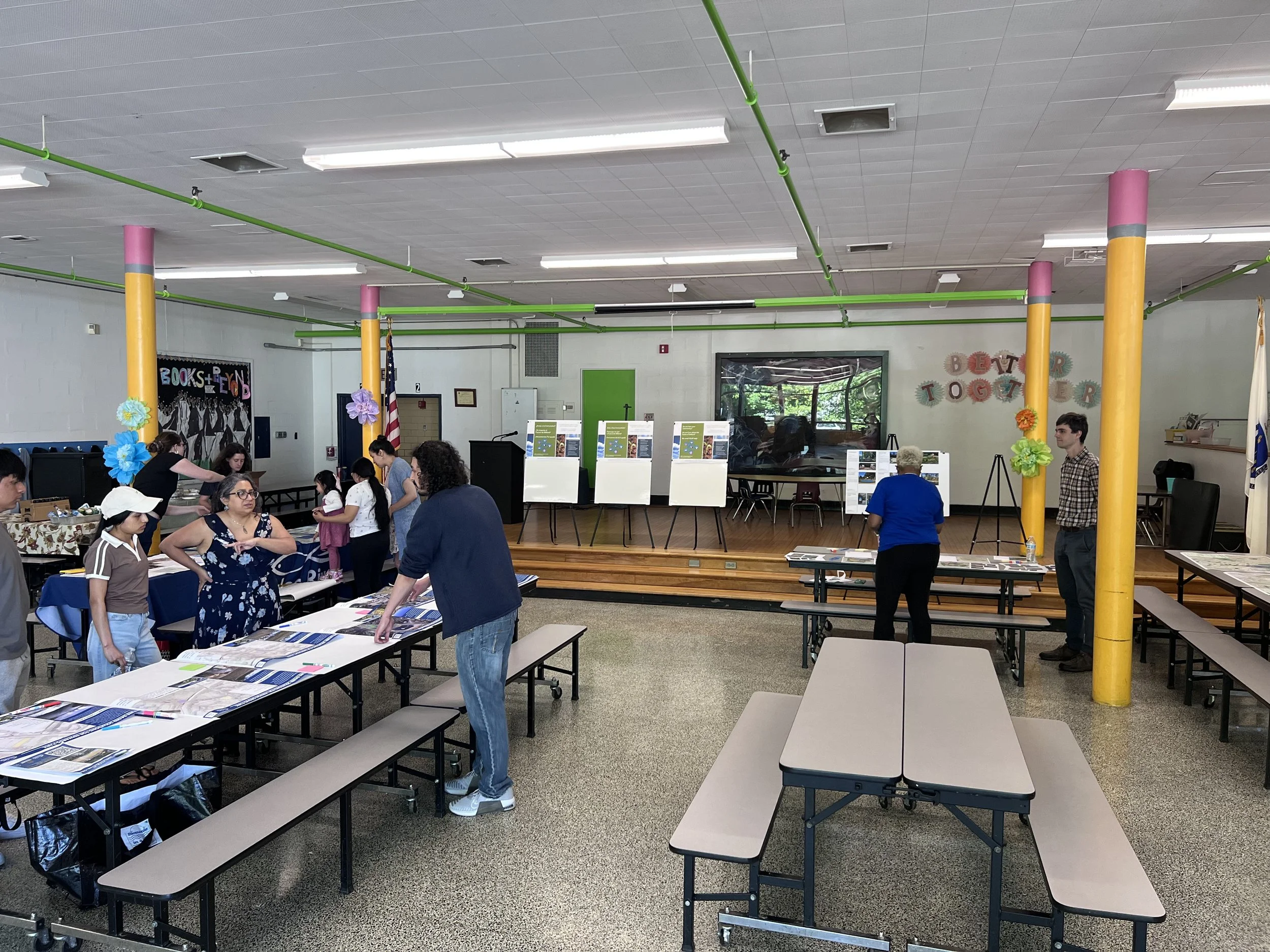
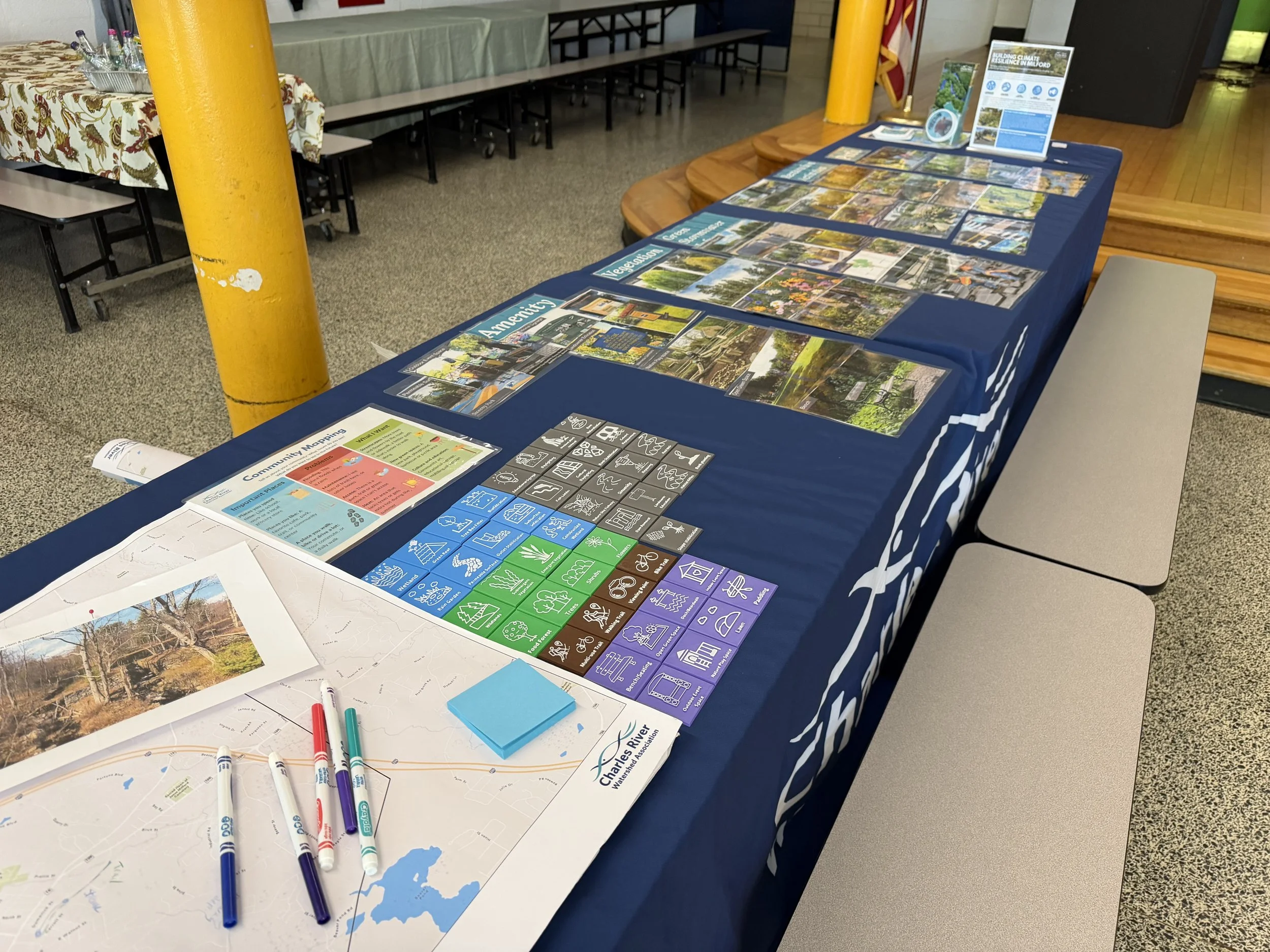
On Saturday, May 16th, CRWA, ClimateThrive, GZA, and Rosetta Languages assembled information stations within the Memorial Elementary School cafeteria dedicated to each project that residents could rotate between, all while enjoying a catered lunch from BR TakeOut. As a background on watershed principles and the significance of green infrastructure projects, CRWA led a demonstration of “Bioswale in a Bag.” The model works by visualizing runoff and flooding in “business-as-usual” conditions, then by using sponges throughout to mimic green infrastructure systems. With the information learned from this hands-on activity, residents were prepared to dive deeper into the project designs and their implications for Milford and the greater watershed. Attendees with language communication barriers had access to interpretation services provided by Rosetta Languages. Youth participation was supported with access to activities like frisbee golf and cornhole.
The afternoon was filled with effective community building and information sharing by residents and project partners alike. Community workshops like these show the importance of community voices in shaping a town and its environment. A conversation with neighbors can be the foundation of great change.