
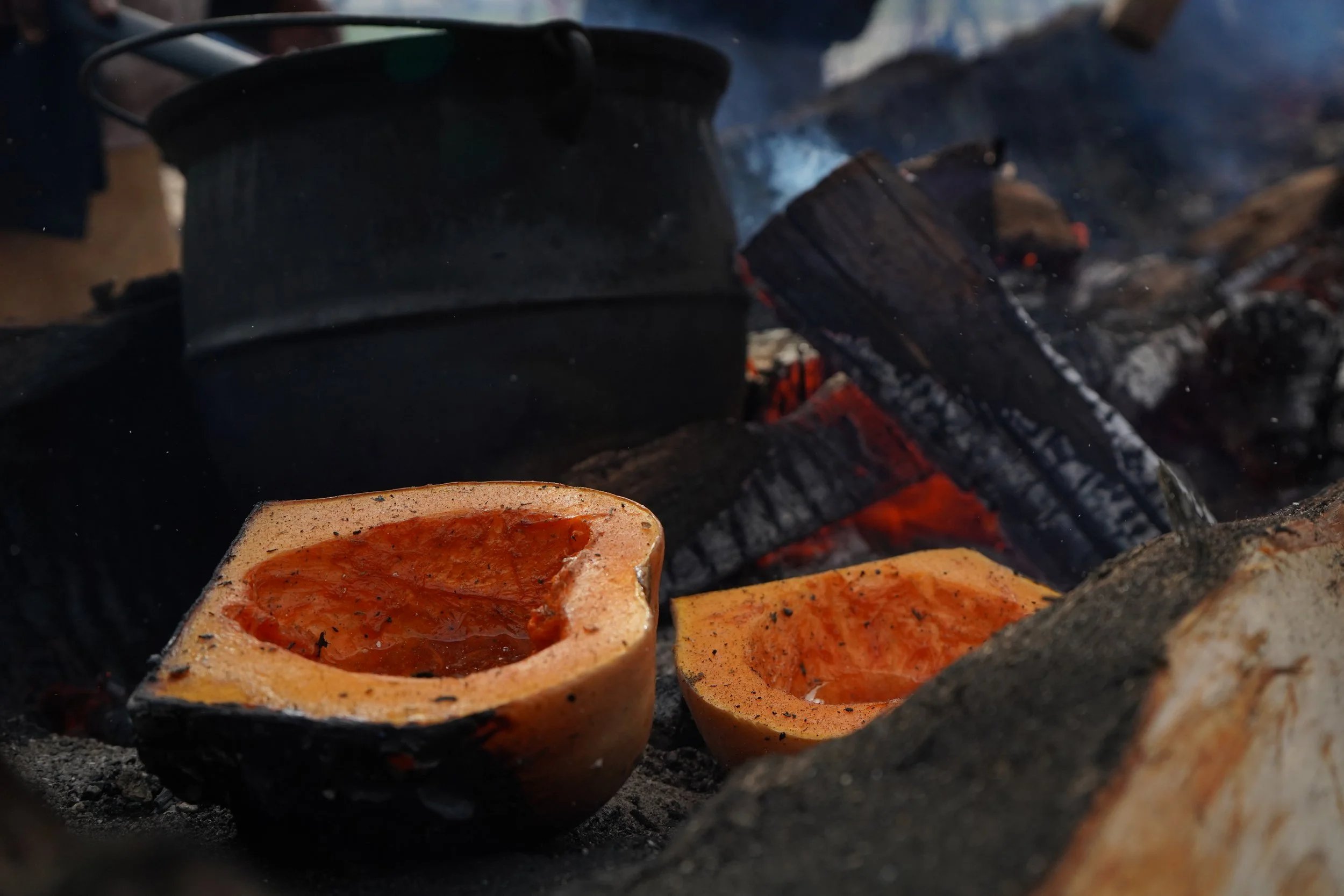
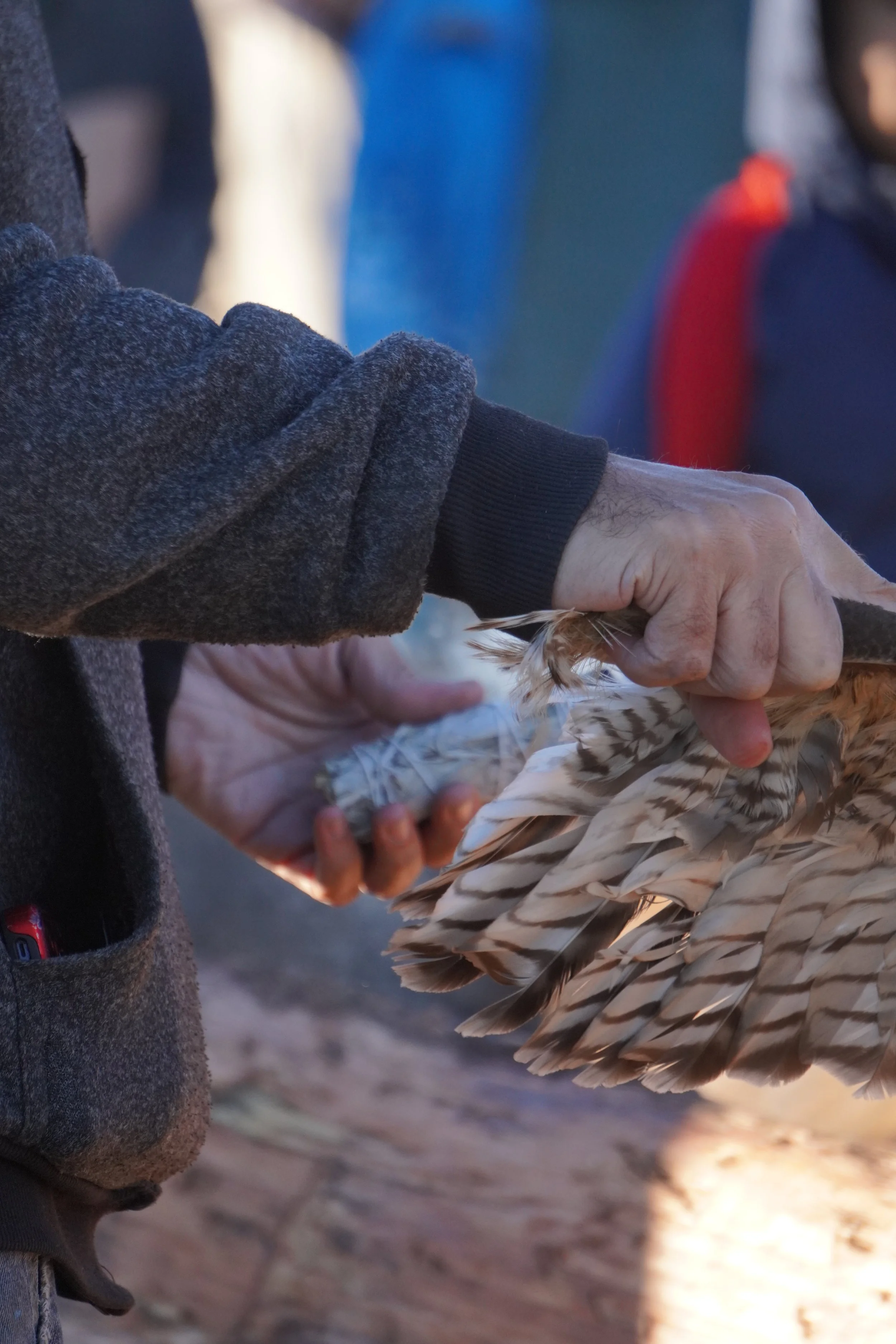
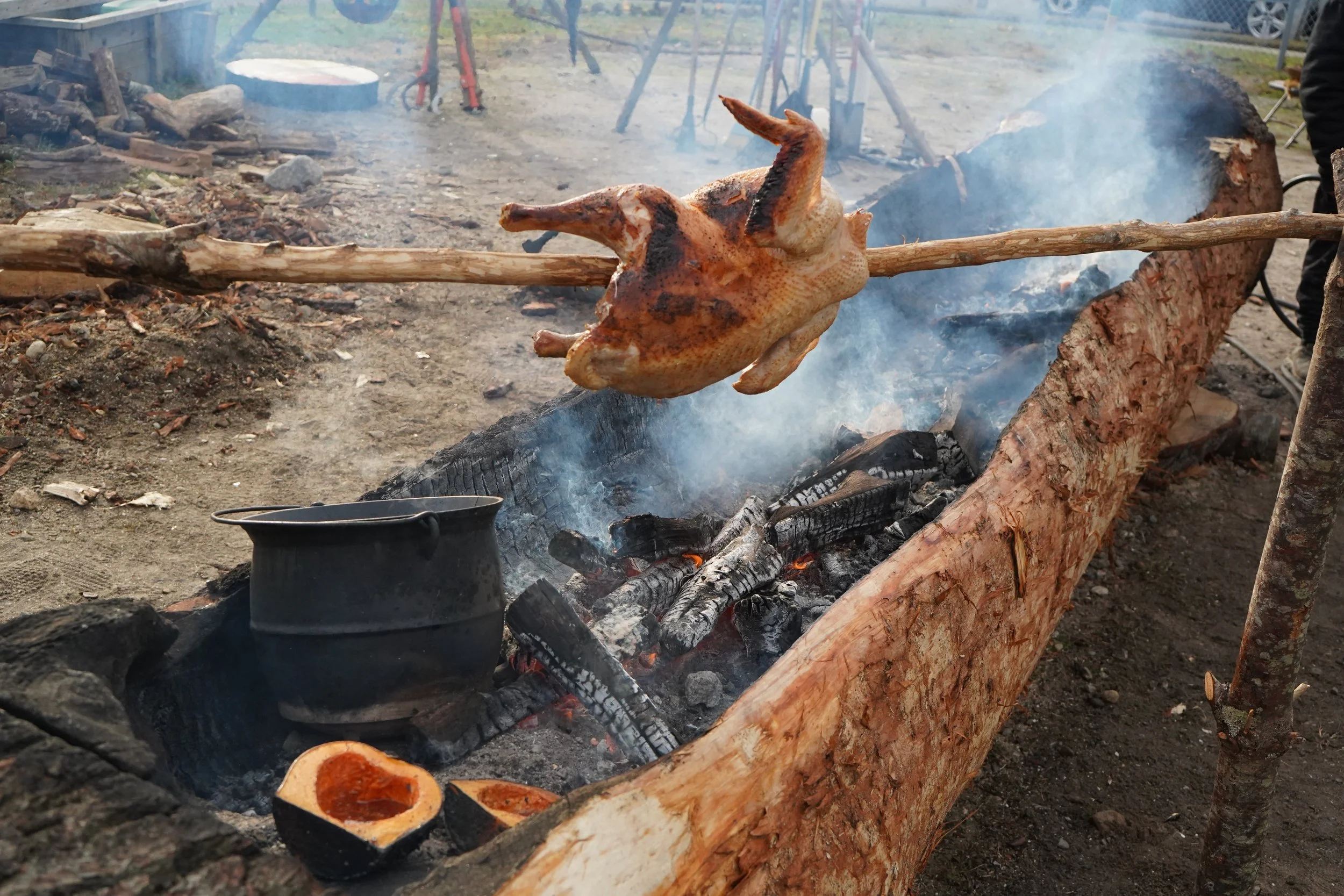
All images were taken by Emilio Tirado in New Bedford.
The Charles River watershed is within the traditional territory of the Massachusett, Nipmuc, and Wampanoag Nations. For millennia, the Mashpee Wampanoag people practiced extraordinary cultural and environmental stewardship in Massachusetts. In honor of National Native American Heritage Month, we sat down with Hartman Deetz, Mashpee Wampanoag artist and advocate, to highlight how Indigenous ecological knowledge and traditions of reciprocity with the Earth can guide us to be better stewards of the Charles River watershed. We thank Hartman for his involvement and for continuing the practice and celebration of Wampanoag culture and traditions.
Many staples associated with Thanksgiving today - turkey, mashed potatoes, and pumpkin pie - became associated with the American Thanksgiving holiday in the 1800s, as industrialized agriculture and commodity food production grew. Instead, Mashpee Wampanoag Thanksgiving celebrations honored seasonal changes and local native species like green corn, cranberries, and herring. Mashpee Wampanoag people celebrated 13 Thanksgivings annually, aligned with the moon’s cycle, to show this respect and gratitude for Earth’s natural abundance. The Wampanoag autumnal feasts focused on kinship with the Earth, its waters, land, and organisms, acknowledging that all living things hold equal importance in nature.
Reciprocity and kinship with the earth are vital aspects of Wampanoag culture. To show respect for all forms of life, Wampanoag people used all parts of hunts and harvests, gave offerings to the earth, and considered species’ population size when hunting each season to maintain healthy levels. Hartman Deetz reflected that when you go without, you realize how much you should appreciate what you are accustomed to having.
As we appreciate what our land and water provide us, we must also consider what we can give back. We can learn from Mashpee Wampanoag tradition by giving thanks to the Charles River watershed. Whether you spend time on the water, pick up litter, remove invasive plants, or connect with the river in your own way, we hope you join us in celebrating the Charles, or the Quinobequin, this November.