
Boston Rivers’ Failing Report Cards: Infrastructure Issues Halt Progress
Water quality in the Charles River stalls, while the Mystic and Neponset Rivers decline.
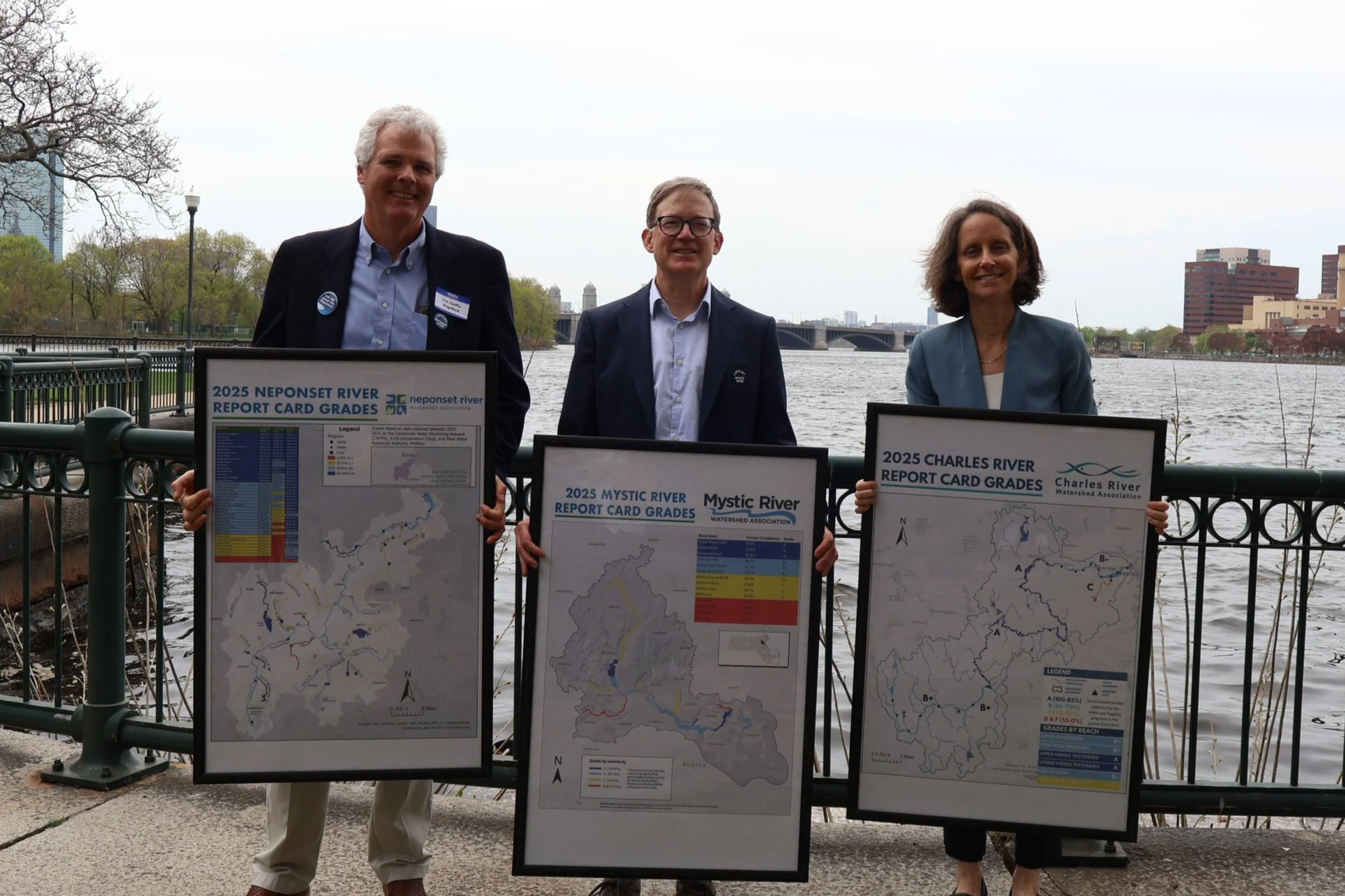
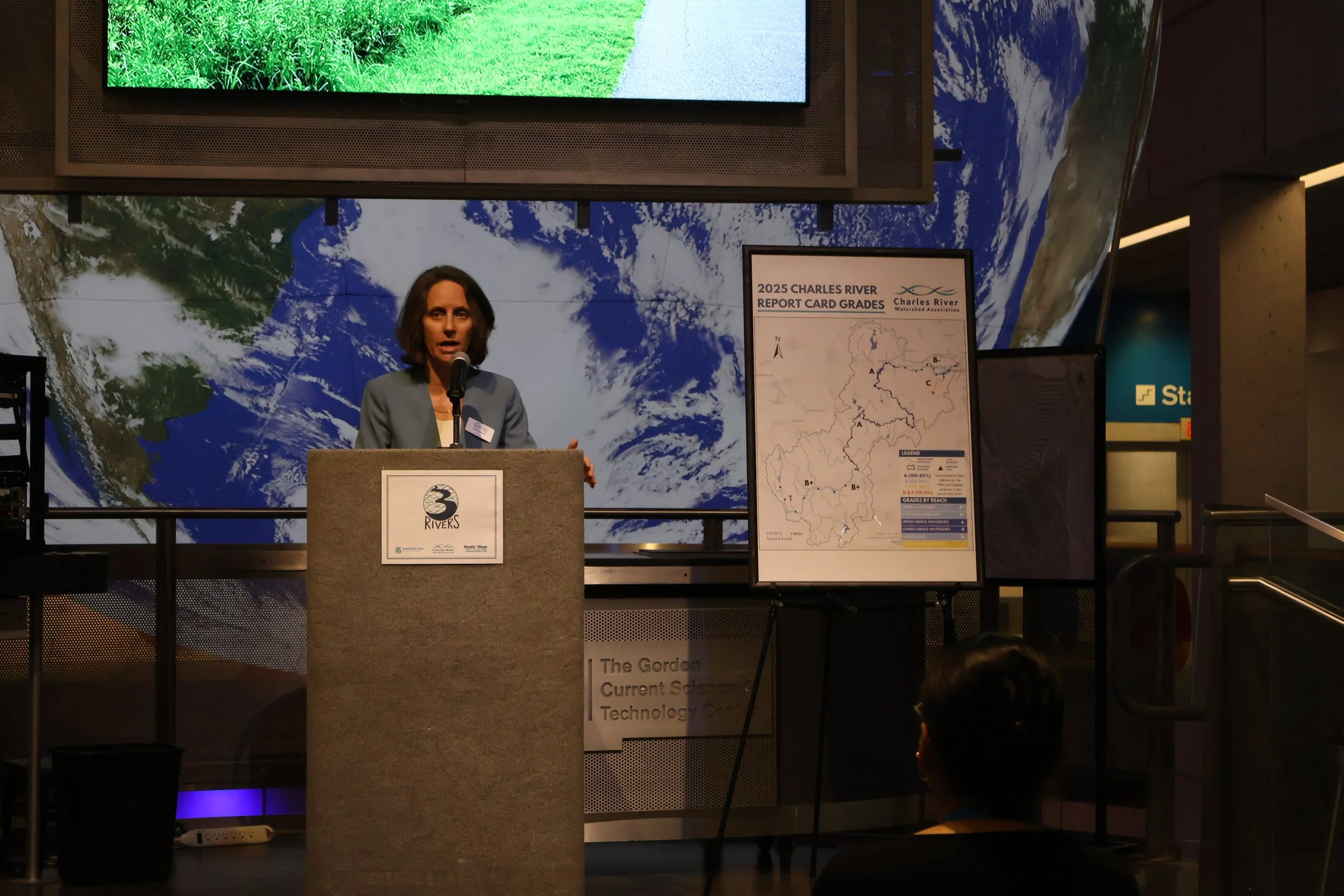
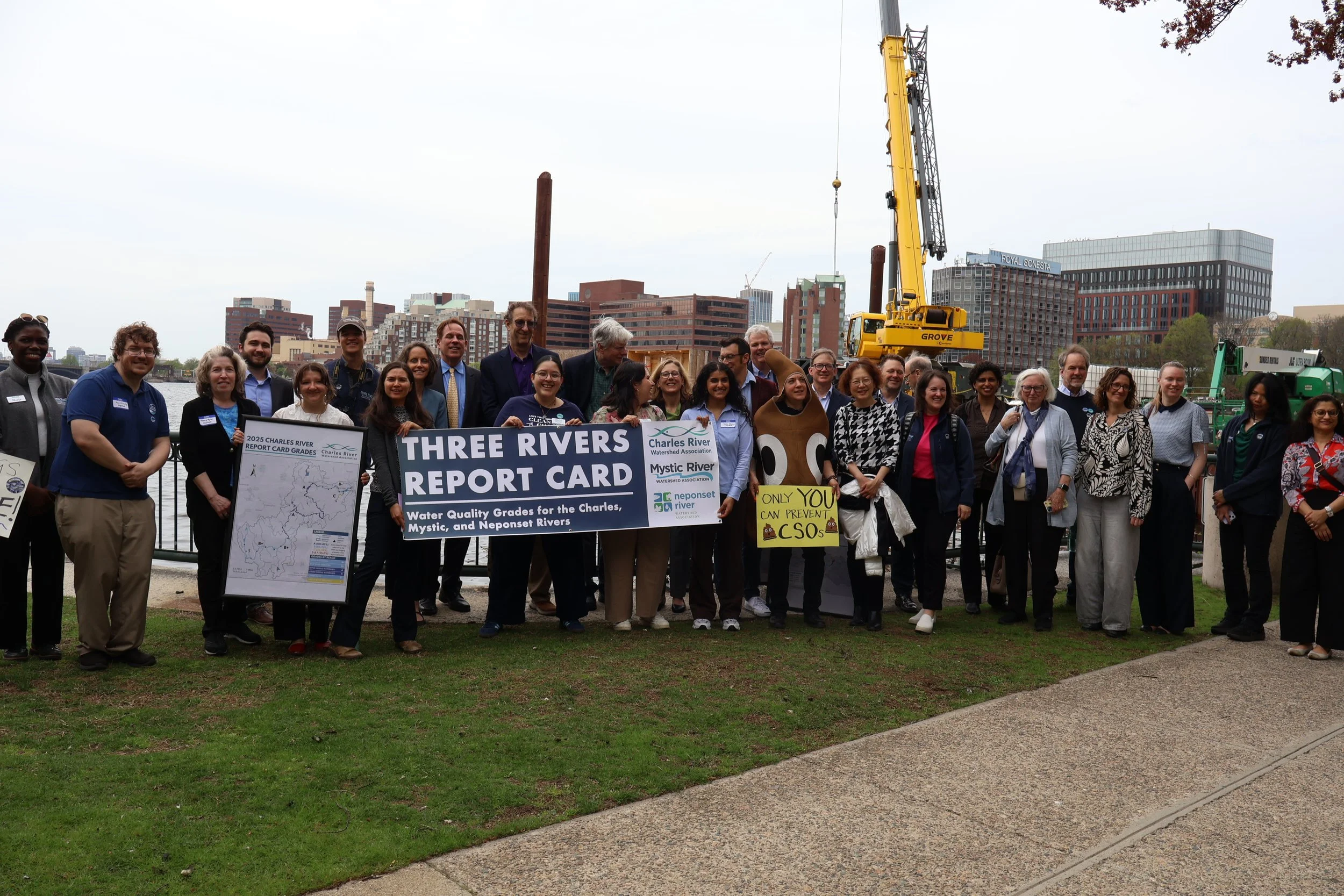
BOSTON, MA—On May 6, 2026, Charles River Watershed Association, Mystic River Watershed Association, Neponset River Watershed Association, and community partners gathered at the Boston Museum of Science to announce the 2025 Water Quality Report Card Grades for the three rivers that flow into Boston Harbor—the Charles, Mystic, and Neponset.
Grades were slightly worse than the previous year, with most in the B and C ranges, despite ongoing efforts to improve water quality. Watershed groups say that outdated infrastructure, such as combined sewer systems, illicit discharge pipes, and antiquated stormdrains, is to blame.
Speakers highlighted the successes, challenges, and ongoing efforts to update and restore water quality in the three urban rivers. Special focus was on how increased precipitation and outdated infrastructure impact river health, safe recreation, and enjoyment of these rivers—and how close partnership at the local, state, and federal levels is necessary to advance on-the-ground solutions.
“Our rivers and water systems are under threat from all sides—feeling the effects of aging infrastructure and facing more severe and more frequent disasters as a result of climate change—but our watersheds are being asked to do more with less,” said U.S. Senator Edward J. Markey. “We need to continue to invest in communities so that our waterways are clean and safe for generations to come. I’m grateful for the Charles River Watershed Association, Mystic River Watershed Association, Neponset River Watershed Association, and the community partners who gathered today for their on-the-ground—and in-the-ground—solutions to better water quality.”
WHAT GOES INTO A GRADE?
In 1995, the U.S. EPA began issuing the annual Charles River Report Card to assess the river's recreational health and educate the public about challenges to water quality. In 2006 and 2021, the U.S. EPA issued Report Card grades for the Mystic and Neponset Rivers, respectively. Beginning in 2021, grades for the Charles, Mystic, and Neponset have been reported together at a joint announcement with state and local partners.
Grades are based on the percentage of time E. coli concentrations are safe for recreation, precipitation data, and are weighted with a three-year average. Additionally, in the Charles River, grades account for the presence of cyanobacteria blooms and combined sewer overflow (CSO) discharges, two additional threats to public health. In 1995, the grades were designed to reflect river health from a recreational perspective, i.e. how safe the river is for boating or swimming. For a comprehensive grade of river health, additional factors would be considered, such as nutrient pollution, biodiversity, river flow, water temperature, and more.
Each year, Charles River, Mystic River, and Neponset River Watershed Associations rely on hundreds of community science volunteers to collect samples, which are sent for analysis to the Massachusetts Water Resources Authority (MWRA). Those results are reported to the U.S. EPA and announced as letter grades to help the public better understand the recreational health of the three rivers that flow into Boston Harbor.
OUTDATED INFRASTRUCTURE’S IMPACT ON WATER QUALITY
Greater Boston and its three rivers are already experiencing the effects of climate change, with increasingly extreme weather. Looking only at the previous three years, we experienced nearly 50 inches of rainfall in 2023 and an intense drought that lasted from October 2024 into May of 2025. Climate impacts such as increased precipitation and longer droughts threaten to stall progress toward swimmable urban rivers.
In the three highly urbanized watersheds, with over 80% impervious cover in some communities, the scale and consequences of heavier rainfall and extreme weather are stark, leading to increased stormwater pollution, more frequent combined sewer overflows (CSOs), and recurrent flooding.
Stormwater pollution is one of the greatest threats to clean rivers–rainstorms wash gasoline, trash, oil, pet waste, and more from our roads, parking lots, and roofs straight into storm drains, which carry polluted runoff, untreated, directly into rivers. When untreated, stormwater carries excess nutrients that degrade water quality and the river ecosystem, aiding rampant growth of invasive plants, toxic cyanobacterial blooms, and even fish kills.
“From Superfund contamination to ongoing stormwater pollution, the Neponset River tells the story of what environmental injustice looks like in practice - and our residents in Mattapan, Dorchester, and Hyde Park have lived it firsthand,” said Representative Brandy Fluker-Reid (D-Boston). “This is a public health crisis rooted in decades of disinvestment in Black and Brown communities. Crumbling infrastructure and polluted runoff don't just hurt our grades on a report card; they hurt the people who live, fish, paddle, and raise their families along these banks.”
Another source of pollution is illicit connections, which occur when underground sewer pipes are connected to the stormwater system, sending wastewater directly into our rivers.
Combined sewer overflows (CSOs) occur when heavy rain and intense storms cause our outdated combined sewer systems in Boston, Chelsea, Somerville, and Cambridge to overflow into local waterways, exposing river users to bacteria, viruses, excess nutrients, pharmaceuticals, trash, and even PFAS compounds.
“EPA is working to improve efforts that advance water quality in and around Boston”, said EPA New England Regional Administrator Mark Sanborn. “Clean water protects public health, strengthens important ecosystems, supports economic growth, and expands opportunity across the region.”
A SHARED VISION FOR A RESILIENT FUTURE
It’s not that we lack resources; it’s that we lack investment. From the Seine in Paris to the Chicago and Willamette Rivers here at home, cities worldwide are proving that urban waterways are worth the capital. Healthy, resilient rivers do more than just flow; they support public health, make our communities more resilient to flooding and climate change, and restore lost biodiversity. Clean water isn't just a resource for recreation—it’s an investment in our collective future.
CHARLES RIVER WATERSHED
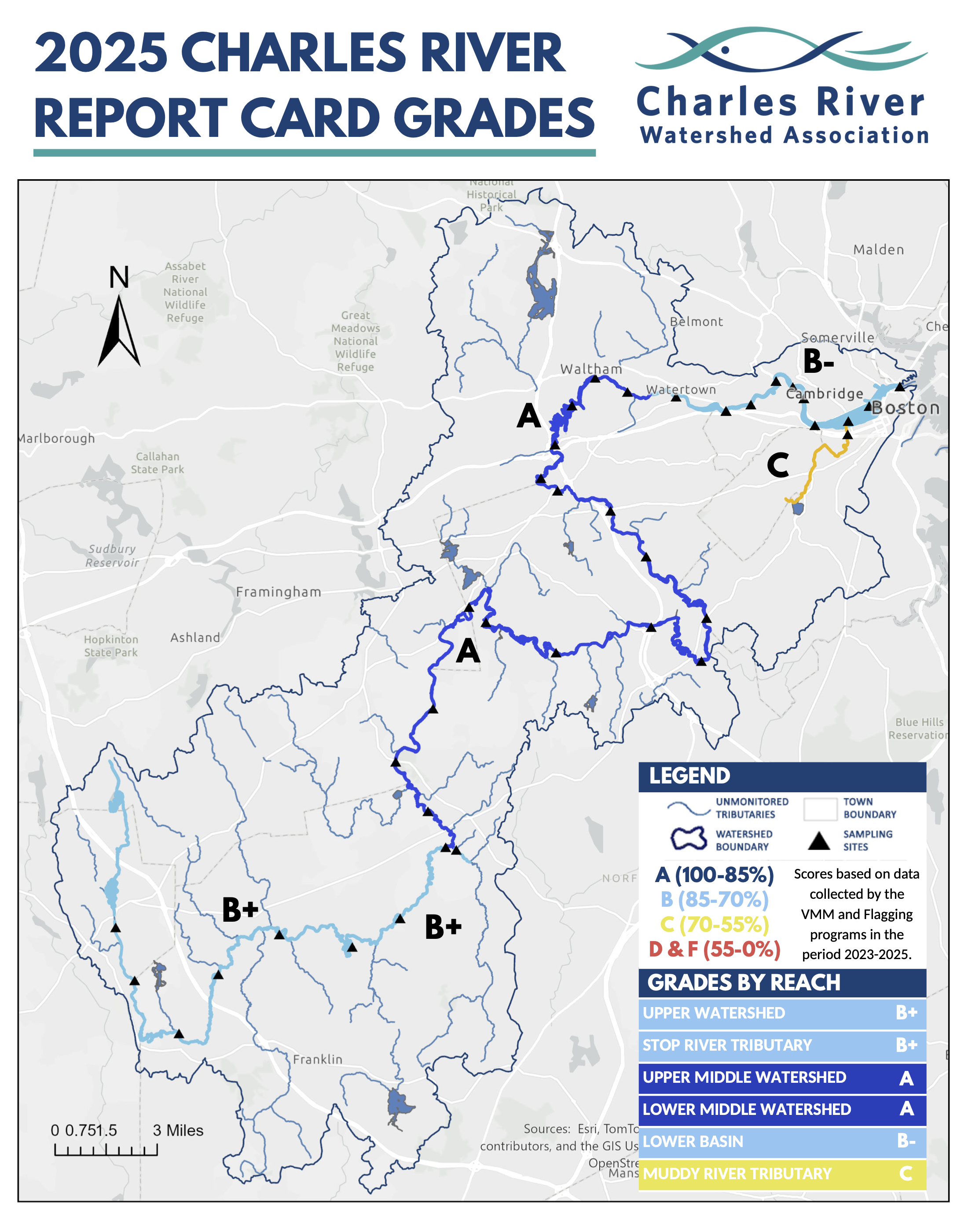
In the Charles River, grades ranged from A’s in the middle watershed, B’s in the upper watershed and Lower Basin, to a C in the Muddy River, following trends observed across recent years. More developed, paved areas consistently see lower grades due to stormwater pollution, while greener areas with more forests and wetlands are safe for swimming on most days.
Progress has largely stalled or declined slightly in the Upper and Upper middle watersheds, while the more urban parts of the Charles show slight, gradual improvements in water quality over time. However, drought, heat, and increased precipitation from climate change make low water levels, toxic cyanobacteria blooms, CSOs, and stormwater pollution more frequent, inhibiting safe recreation. In Summer 2025, the Charles River Lower Basin experienced a cyanobacteria bloom that lasted for over 80 days! In both 2024 and 2025, severe drought caused several sections of the Charles River to run very low, with observed water levels under half a foot in Bellingham, Medway, and Newton. Additionally, in the past 3 years, due to ~130 inches of precipitation, 70 known CSO events discharged more than 136 million gallons of raw or treated sewage into the Charles.
Two areas saw grades decrease slightly in 2025 as a result–the Lower Basin decreased from a B in 2024 to a B-, and the Muddy River tributary decreased from a C+ in 2024 to a C. The decrease in grade in the Lower Basin can be attributed mainly to the 2025 cyanobacteria bloom, while the decrease in the Muddy River is likely due to a combination of stormwater runoff and the known presence of illicit connections discharging into the tributary.
Two areas saw grades increase slightly in 2025 – the Upper Watershed increased from a B in 2024 to a B+ in 2025, and similar trends are seen in the Lower Middle Watershed. The Upper Middle Watershed and the Stop River tributary in Medfield maintained the same grades as last year.
“These grades make it clear that progress has stalled,” said Emily Norton, Executive Director of Charles River Watershed Association. “To achieve a truly clean, healthy, and swimmable Charles, we need to make the necessary investments in reducing stormwater runoff and ending sewage discharges. Let’s be the generation that finally finishes the job of delivering a clean Charles.”
MYSTIC RIVER WATERSHED
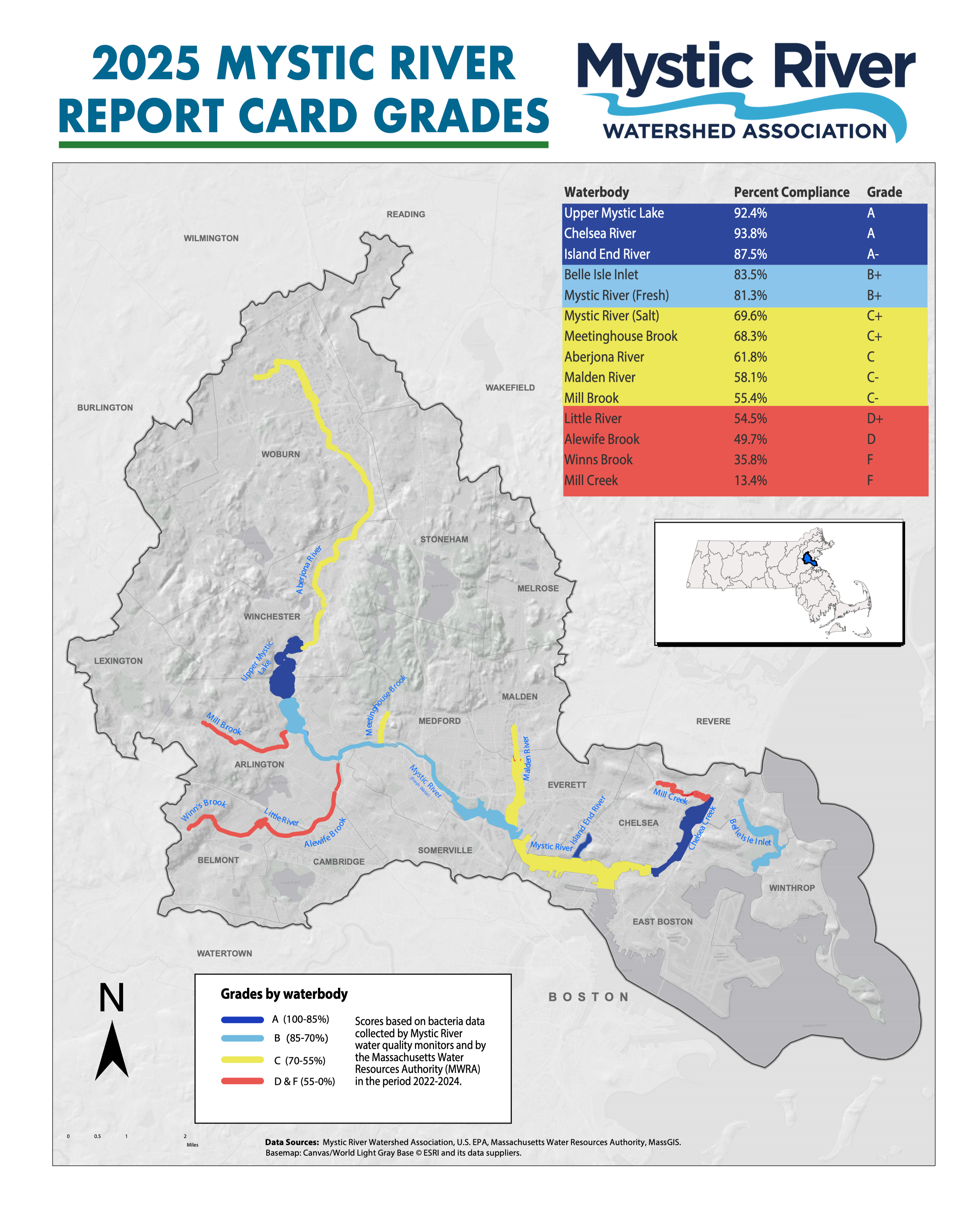
In the Mystic River watershed, water quality grades range from A to F. Upper Mystic Lake continues to score the highest, with an A grade. The main stem of the Mystic River receives a B+ for its freshwater segment, reflecting water quality that meets boating standards over 90% of the time, though the river meets swimming standards significantly less frequently (~68%).
A remarkable result this year is that the grade for the saltwater segment of the Mystic River dropped from a B+ to a B-. The reason for the grade change is a spike in 2025 bacteria values at two separate locations just below the Amelia Earhart Dam. The exact mechanism is, for now, a mystery. But this result highlights a problem that should be investigated in more detail. MyRWA looks forward to working with the Massachusetts Water Resources Authority and the City of Somerville to find the source of pollution.
As in years past, the Mystic’s smaller tributaries remain substantially impaired by bacterial pollution. The Alewife Brook, at the center of this year’s advocacy efforts to eliminate combined sewer overflows (CSOs) across greater Boston, received a D. Despite its ongoing impairment, Alewife Brook and its surrounding parks and paths remain a cherished local resource. For Earth Day, over 200 people came out to Save the Alewife Brook’s Earth Day Cleanup and CSO tour to remove trash and get involved in the effort to end sewage pollution.
CSOs are not the only source of bacterial pollution in the Mystic River watershed. Mill Creek in Chelsea received the watershed’s lowest grade, an F, despite having no CSOs. Bacteria reach tributaries like Mill Creek through other means, including illicit connections, unintentional infiltration between underground pipes, forgotten culverts, and polluted stormwater. This summer at Mill Creek, MyRWA, our summer fellows, and community members will be chasing storms and sampling for bacterial hotspots to better understand where this pollution is coming from and what we can do in the future to manage it.
“I am extremely proud that our data collection and Report Card can contribute to the public conversation about the effects we are having on the environment,” says Patrick Herron, Executive Director for MyRWA. “Protecting our rivers and streams is only possible if we know where the problems are. The next step is finding solutions, which we look forward to collaborating on with our wonderful partners in city, town, and state government.”
NEPONSET RIVER WATERSHED
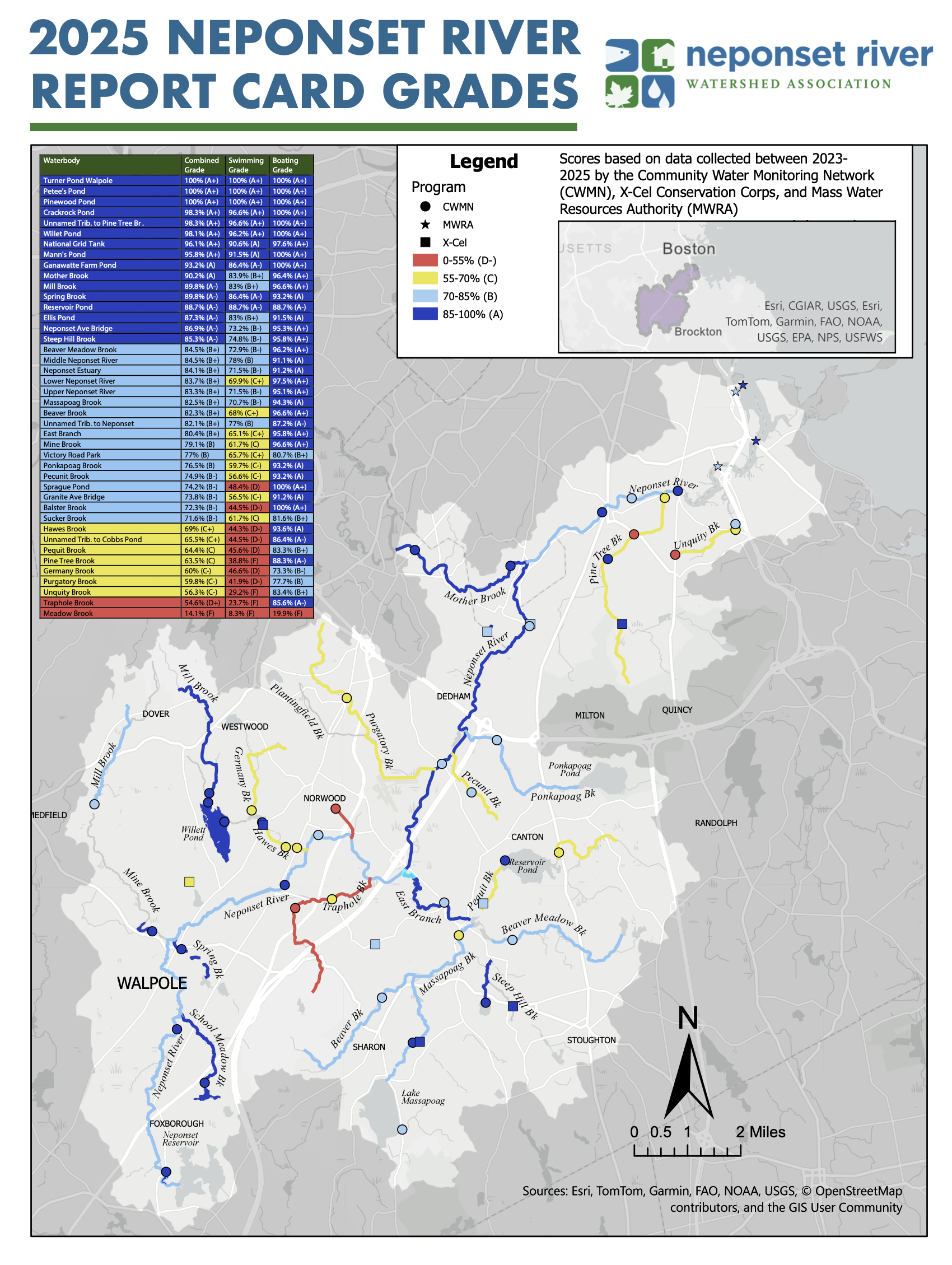
For the Neponset Watershed, grades in the mainstem maintained a B, while tributaries ranged from As to an F. Of note, all but one pond monitored received an A grade. Only two sites scored below C — Traphole Brook and Meadow Brook — which have consistently ranked near the bottom over the last several years.
These results are consistent with past years, with most sites scoring similarly. While the Neponset has improved dramatically over the last few decades, this recent plateau suggests that the remaining problems are proving difficult for communities to resolve on their own.
Many of our lowest-scoring tributaries are in highly developed areas, with impervious surfaces and limited stormwater control measures to filter out pet and street waste that can negatively impact these waterbodies. Although these infrastructure upgrades are expensive and take time to permit and construct, these results show there is potential for meaningful improvement in areas of Canton, Norwood, Milton, and other towns.
The most notable change over the last year is the decline of Sprague Pond on the Boston/Dedham border. Previously one of our top-scoring sites for bacteria, water quality has declined significantly and now earns a B-. In addition, cyanobacteria blooms were observed in late 2024, further reducing the pond’s recreational use. As a kettle pond with no outflow, Sprague is highly sensitive to changes in land use, inflow, and drought conditions. To protect this important resource for Hyde Park residents, NepRWA hopes to coordinate with the City of Boston and Town of Dedham on ways to keep Sprague Pond open for fishing and boating.
“Overall the separate scores for boating and swimming provide a clear picture: the Neponset is overwhelmingly safe for its most common form of recreation—paddling,” says Ian Cooke, Executive Director of the Neponset River Watershed Association. “While improvements to infrastructure, stormwater management, and equitable access remain top priority goals, residents can feel confident boating on the Neponset without major concerns for their health.”
###